3D Printer Filament Guide: Which Filament for What? PLA, PETG, TPU & Co.
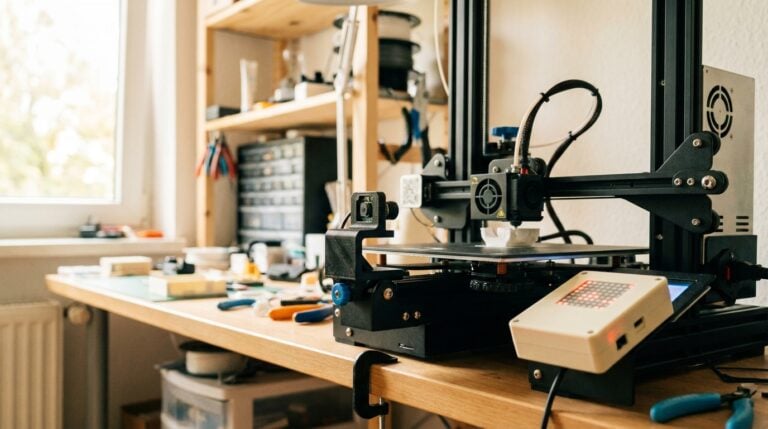
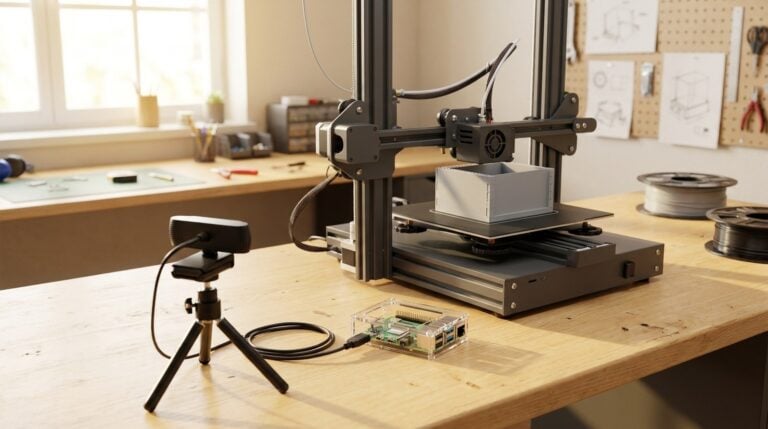
Since the Elegoo Neptune 4 Plus landed on my workbench, I have printed my way through pretty much the whole filament universe – several PLA variants, PETG, TPU and a few exotics. One thing became clear very quickly: choosing the right filament decides between success and a failed print more often than any slicer setting. In this buying guide I will show you which filament suits which use case, what the individual materials are good (and bad) at, and how to store and dry your spools properly so they do not turn useless after a few weeks.
I am deliberately sticking to Elegoo’s lineup – not because other brands are bad, but because these are the exact filaments I use myself, and I would rather give you honest hands-on experience than copied datasheets. The material class properties (PLA, PETG, TPU & co.) apply across all brands though, so you can transfer the recommendations to other manufacturers. Full transparency: Elegoo provided the printer as a review unit, but has no influence on the content of this article.
Filament is the plastic wire (usually 1.75 mm in diameter) that FDM 3D printers melt and deposit layer by layer to build objects. Common materials are PLA (easy, for decor and everyday parts), PETG (tough and heat-resistant), TPU (flexible) and ASA (UV-proof for outdoor use). A 1 kg spool costs roughly $13 to $22 depending on the material (as of August 2026).
The short answer: which filament for what?
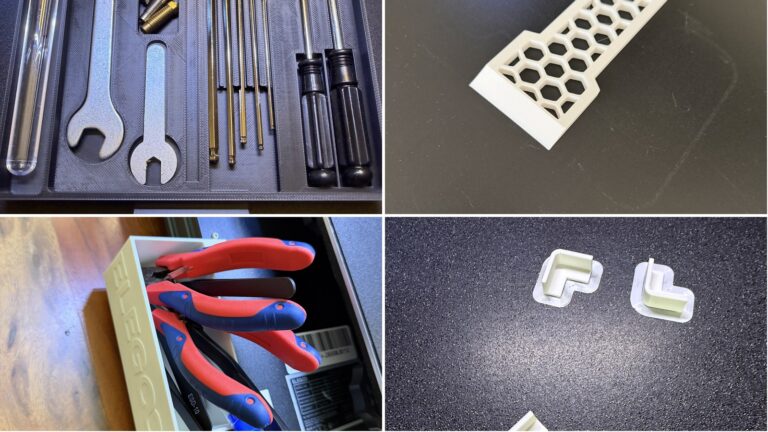
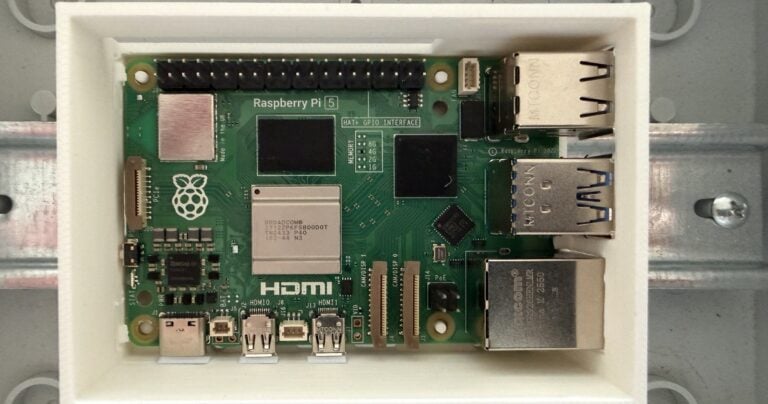
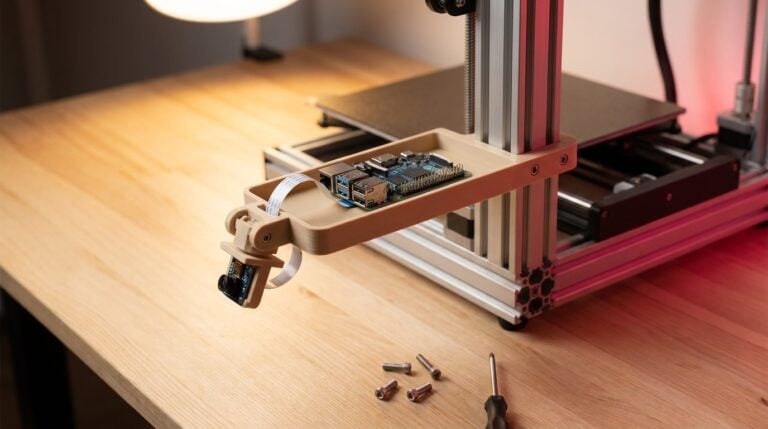
If you only take away one rule of thumb: PLA is the right choice for almost everything that lives indoors and does not get hot – decor, prototypes, organizers, a Raspberry Pi case on your desk. PETG is what you pick for functional parts that need toughness or heat resistance – brackets, enclosures in warm places, parts with screw connections. TPU is the flexible material for gaskets, feet and protective covers. ASA belongs outdoors, because it is the only mainstream material that permanently shrugs off UV light. Everything else is a special case – and those are exactly what we will look at in detail now.
| Material | Typical use | Nozzle / bed* | Difficulty |
|---|---|---|---|
| PLA / PLA+ | Decor, prototypes, everyday indoor parts | 200–230 °C / 60 °C | very easy |
| PLA Matte / Silk | Display pieces, gifts | 200–230 °C / 60 °C | easy |
| PETG | Functional parts, brackets, warmer environments | 240–260 °C / 70 °C | easy to medium |
| TPU 95A | Flexibles: gaskets, feet, covers | 230–250 °C / 35 °C | medium (print slowly) |
| ASA | Outdoor, UV-exposed parts | 250–270 °C / 90 °C | medium to hard (warping) |
| ABS | Tough technical parts, up to ~85 °C | 250–270 °C / 90 °C | hard (enclosure recommended) |
| PLA-CF / PETG-CF | Stiff technical parts, premium look | like base material + hardened nozzle | medium |
| PC / PAHT-CF | High-temperature engineering | 280 °C+ / 110 °C | hard (enclosure required) |
What actually matters when choosing filament
Before we dive into the individual materials, here are the four criteria you can base every filament decision on:
- Heat resistance: PLA already softens at around 45–50 °C – fine for the windowsill, not fine for a car in summer or next to a heating pipe. PETG handles roughly 70 °C, ABS/ASA about 85–95 °C.
- Toughness vs. stiffness: Stiff materials (PLA, PLA-CF) eventually snap under load, tough materials (PETG, ABS, TPU) bend first. For brackets and clips, tough beats stiff almost every time.
- UV and weather resistance: PLA and ABS yellow and get brittle outdoors, PETG holds up considerably better, ASA is made for it.
- Your printer: On an open-frame printer like my Neptune 4 Plus, PLA, PETG and TPU print without drama. ABS, ASA and the high-temperature exotics want a draft-free, warm environment – large parts in these materials love to warp on an open frame. Small parts work, but plan for failed attempts.
PLA: the all-rounder for (almost) everything
PLA is the standard material of hobby 3D printing for good reason: it prints at low temperatures (220 °C nozzle, 60 °C bed in the ElegooSlicer profile), barely warps, produces practically no smell and delivers clean surfaces even on fast Klipper machines. If you are just starting out: use PLA until you have a concrete reason for something else. You still need to know its weaknesses: PLA softens from about 45–50 °C, creeps under constant load, and gets brittle outdoors in the sun over time.
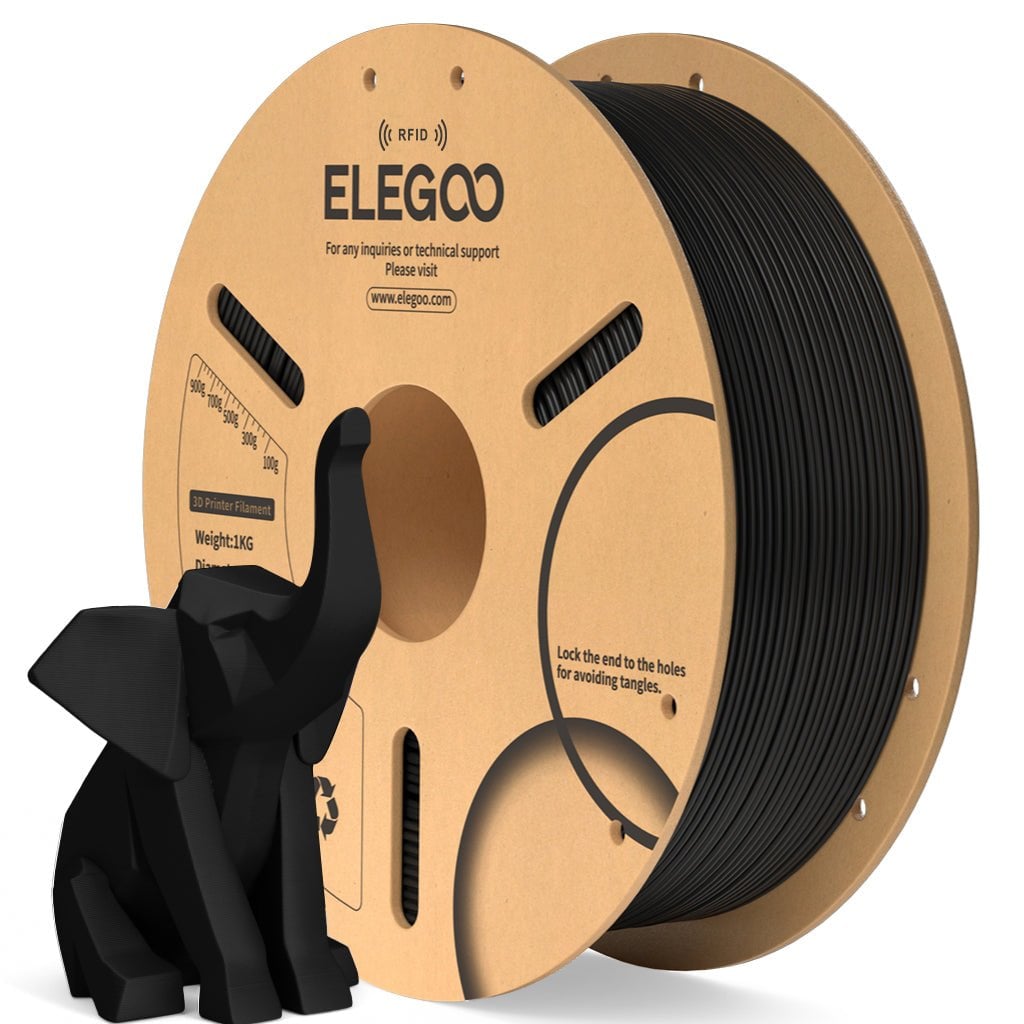
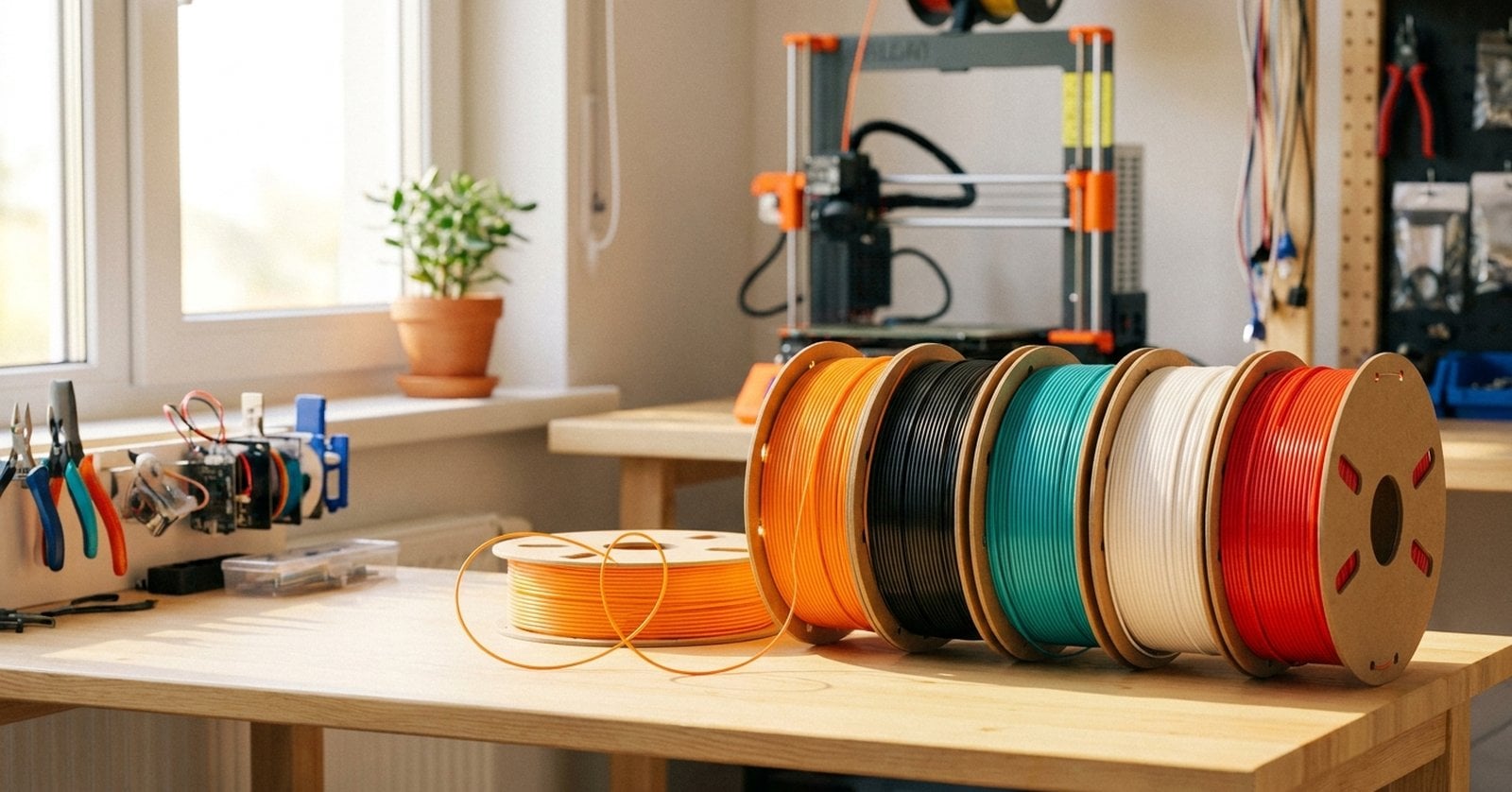
Within the PLA family, Elegoo has fanned out the lineup quite a bit – and it is less marketing than it looks, the variants really do differ noticeably:
- PLA standard (on Amazon*) – the bread-and-butter plastic in dozens of colors on a cardboard spool. For prototypes, calibration prints and everything that simply has to work.Links marked with * are affiliate links, which makes them advertising. If you buy through one, I earn a commission at no extra cost to you. As an Amazon Associate I earn from qualifying purchases. Learn more
- PLA Basic refill (on Amazon*) – filament without a spool, designed to snap onto a reusable spool. Saves money and plastic waste if you print a lot.
- PLA Plus / Rapid PLA+ (both on Amazon: PLA Plus*, Rapid PLA+*) – more impact-resistant than standard PLA, so the better pick for parts that occasionally hit the floor. The Rapid variant is built for high-speed printing up to 600 mm/s – on Klipper printers like the Neptune 4 series you mostly notice it on overhangs that stay clean despite the pace.
- PLA Pro (at Elegoo*) – the stiff variant for dimensionally stable parts like brackets and enclosure walls that must not flex.
- PLA Matte (on Amazon*) – my personal favorite and the filament I used to break in the Neptune 4 Plus. The matte surface hides layer lines so well that prints almost look injection-molded. Worth every cent for anything on display.
- Decorative variants – Silk (on Amazon*, glossy like silk), Galaxy and Sparkle (with particles), Wood (with real wood content, matte and grippy) and Marble (stone look). Purely visual fun for vases, figurines and gifts – mechanically it is still regular PLA, Silk tends to be a bit more brittle and prefers slower speeds.
PETG: tough, heat-resistant, my pick for functional parts
PETG sits between PLA and ABS in character: almost as easy to print as PLA, but considerably tougher, and with roughly 70 °C heat resistance it survives places where PLA gives up. On top of that it is waterproof and takes UV light far more calmly than PLA. It is my default choice for everything that has to work: wall brackets, enclosures for electronics that get warm, replacement parts with snap fits, parts in the bathroom or garage.
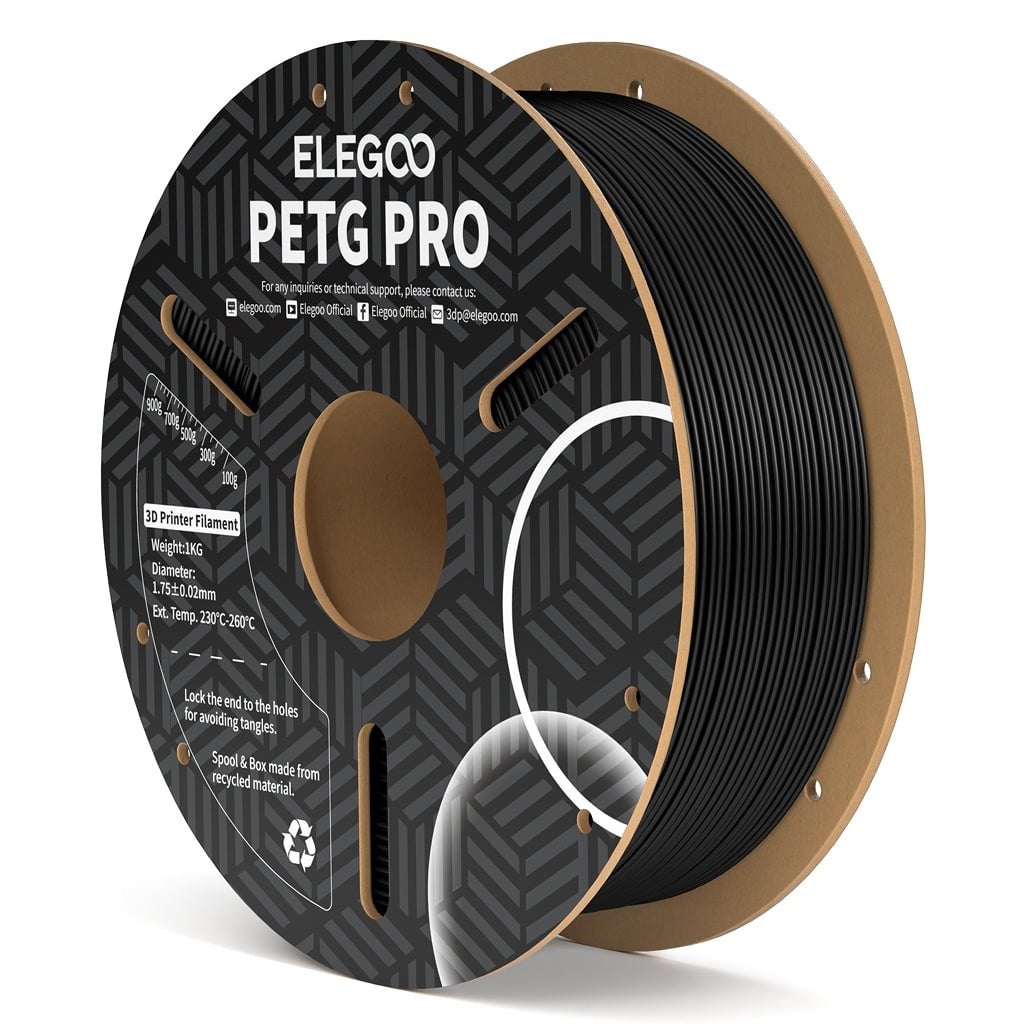
Two rules when printing it: bed at 70 °C (that is what the ElegooSlicer profiles use) and do not max out the part cooling fan – too much cooling ruins layer adhesion, which is the very reason you chose PETG. PETG also likes to string a little; dry filament and well-calibrated retraction keep that under control. Elegoo offers three variants: PETG Pro (on Amazon*) as the standard, Rapid PETG (on Amazon*) for fast printers – my PETG of choice on the Neptune 4 Plus – and PETG Translucent (on Amazon*) for light-transmitting prints such as lampshades or LED diffusers.
TPU: when it has to be flexible
TPU 95A (on Amazon*) is rubbery, flexible and practically indestructible – perfect for device feet, gaskets, edge protectors, phone cases or vibration-damping pads (for example under a 3D printer or a NAS). The 95A refers to the Shore hardness: firm enough to print cleanly, soft enough to bend noticeably.
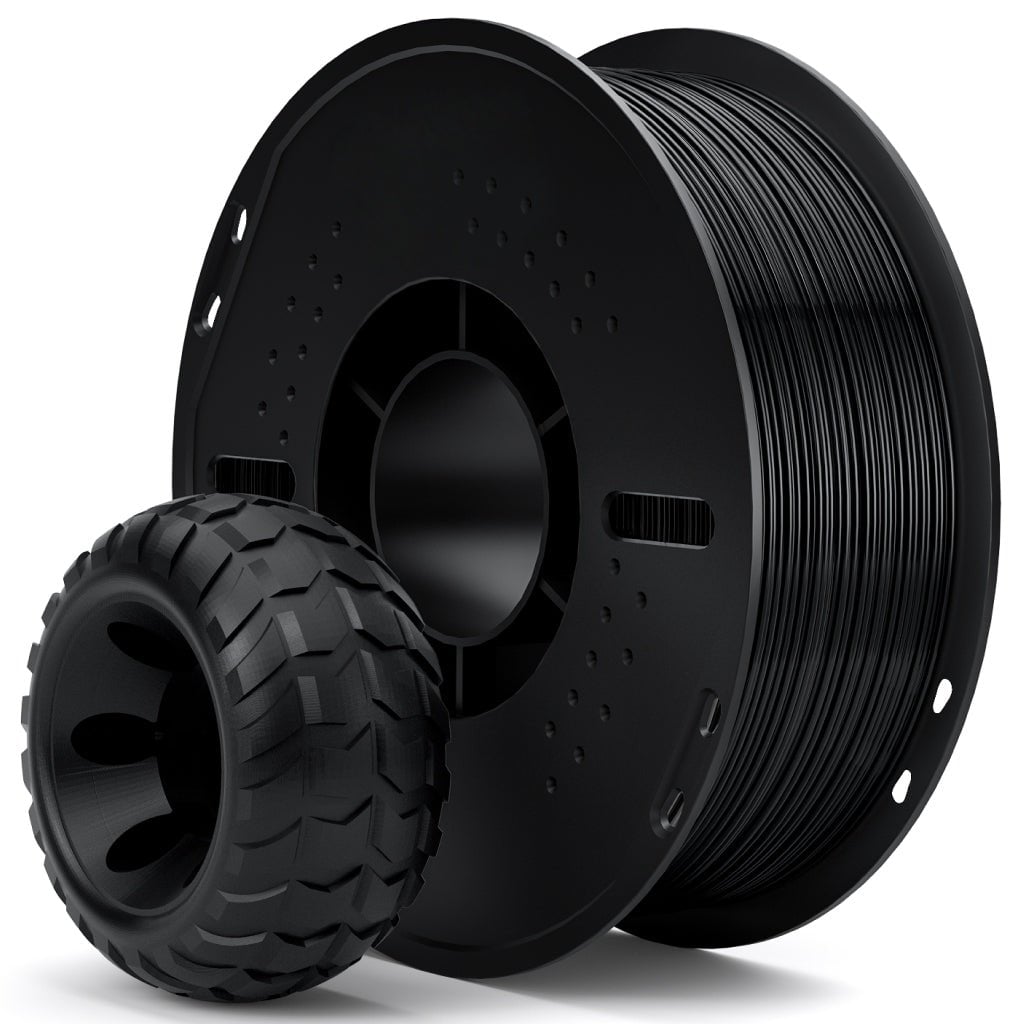
Important to know: TPU is printed slowly. Flexible filament cannot be pushed through the extruder at arbitrary speed or it buckles – the official profiles throttle the flow drastically, and you should let them. A direct-drive extruder like the one on the Neptune 4 Plus is a clear advantage over Bowden setups, where the soft filament has play inside the tube. The bed stays almost cold at 35 °C, but TPU sticks to PEI plates almost too well on its own – for large contact areas a thin layer of glue stick as a release agent makes parts much easier to remove. If you print flexibles regularly, have a look at the three times faster Rapid TPU 95A (at Elegoo*). And: TPU is the most hygroscopic filament in this whole guide – TPU stored in humid air literally foams while printing. More on that in the storage chapter below.
ABS and ASA: for outdoors and heat – with caveats
ABS (on Amazon*) and ASA (at Elegoo*) are the materials for parts that need to take real abuse: dimensionally stable up to about 85 °C (ABS according to Elegoo’s datasheet) and in a similar range for ASA, impact-resistant and easy to post-process. ASA is the more modern relative of ABS and, unlike it, does not yellow after years in the sun – for anything permanently mounted outdoors, ASA is the first choice: weather station housings, camera mounts, garden irrigation parts.
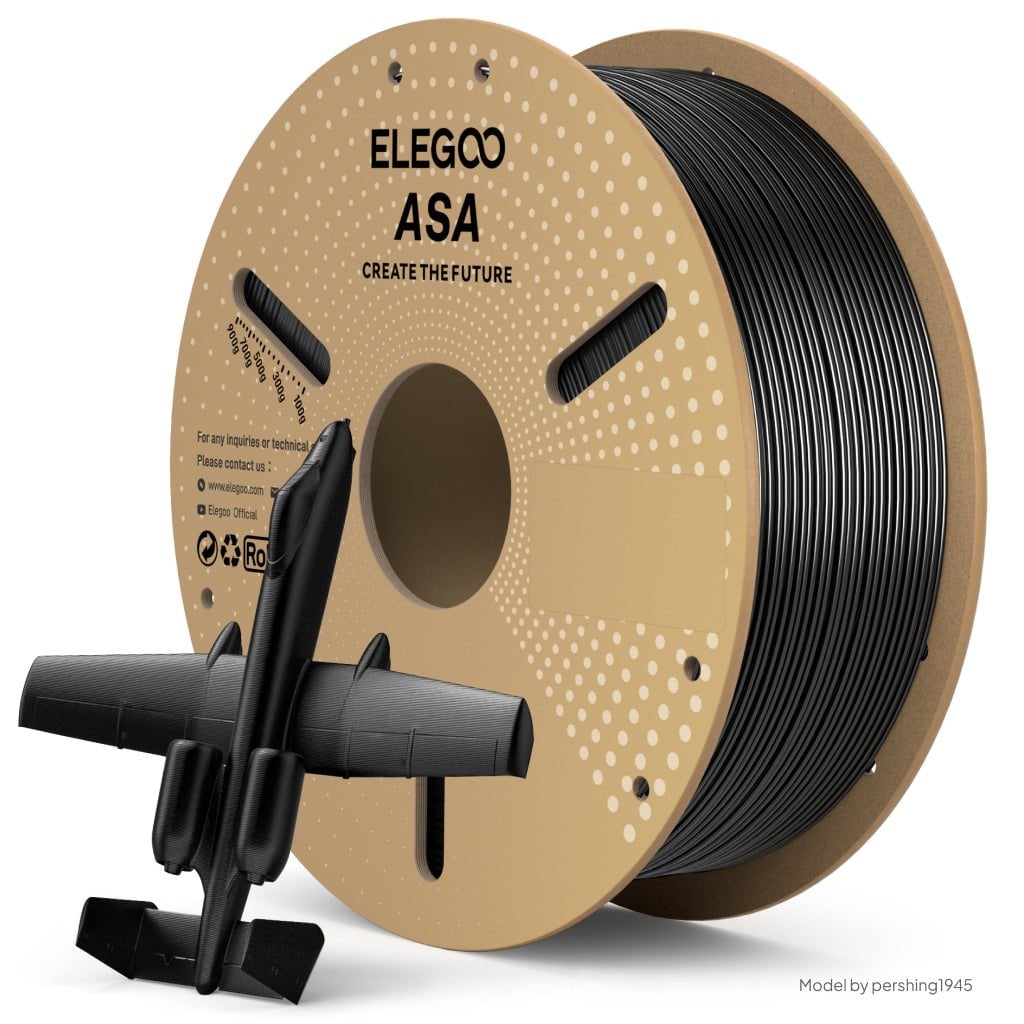
Now for the honest caveat: both materials shrink considerably more on cooling than PLA or PETG. On an open printer like the Neptune 4 Plus that means: bed at 90 °C, avoid drafts religiously – and large parts will still occasionally lift off the plate or crack along layer lines (warping). Small to medium parts are doable with a brim and patience; for large ABS/ASA prints there is no way around an enclosed build chamber (or a DIY enclosure). Add the smell: ABS and ASA emit styrene while printing – only print them in well-ventilated rooms, not in your living room.
Carbon fiber, glass fiber & high-temp: do you need them?
Fiber-reinforced filaments like PLA-CF (on Amazon*) and PETG-CF (at Elegoo*) bring two things: noticeably more stiffness and a beautifully matte, technical surface that makes layer lines nearly invisible. PETG-CF is the more practical choice for loaded parts (gears, brackets, drone parts), PLA-CF scores mostly on looks. Both come with hard requirements though: the fibers act like sandpaper, so a hardened steel nozzle of 0.4 mm or larger is mandatory (0.2 mm nozzles are incompatible according to Elegoo, and the stock brass nozzle wears out quickly), and the spools should be dried for 8 hours at 70 °C before printing.
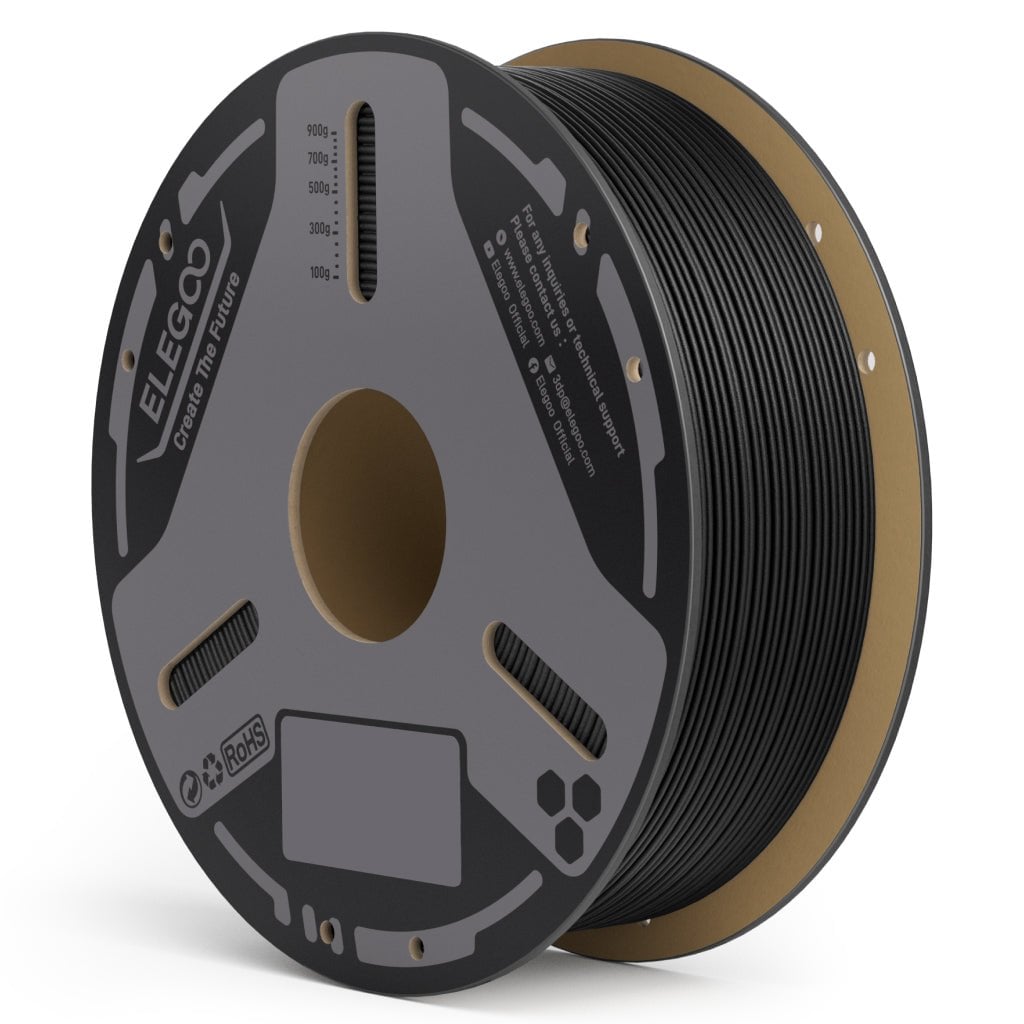
Above that sit the high-temperature exotics: PC (polycarbonate, stable up to 107 °C) and PAHT-CF (carbon-reinforced nylon, up to 194 °C) – impressive numbers, but both explicitly require an enclosed printer, nozzle temperatures of 280 °C and up, and meticulously dry filament according to Elegoo. My honest assessment for the vast majority of makers: leave the exotics alone until a concrete project really demands them – a $44 kilo of nylon that reliably fails on an open printer is no fun at all. For 95 % of applications, PLA, PETG, TPU and ASA are all you need.
Project → filament: the quick reference for Pi makers
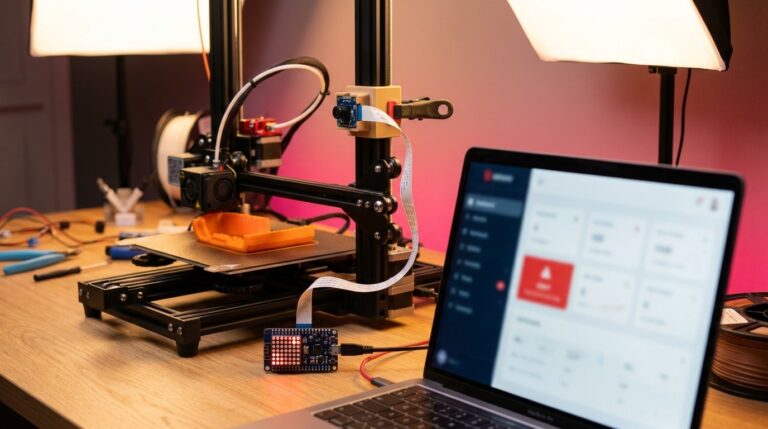
Since many of you (like me) print mostly for Raspberry Pi and smart home projects, here is the mapping from my own practice – from the OctoPrint case to the rack faceplate:
| Project | Recommendation | Why |
|---|---|---|
| Pi case (indoors, actively cooled) | PLA / PLA Matte | Stays far below critical temperature with a fan, best looks |
| Pi case (constant load, attic, cabinet) | PETG | 70 °C headroom instead of 50 °C – summer heat stops being an issue |
| Outdoor sensor/camera housings | ASA | UV-proof, does not yellow or get brittle |
| Brackets, wall mounts, hooks | PETG / PETG-CF | Tough instead of brittle – does not crack when you tighten the screw |
| Device feet, dampers, gaskets | TPU 95A | Flexible, non-slip, swallows vibrations |
| 10-inch rack faceplates, cluster chassis | PLA Pro / PETG | Stiff and dimensionally accurate across large surfaces |
| Decor, figurines, gifts | PLA Matte / Silk | The surface beats everything else |
| Gears, sliding parts | PETG-CF | Abrasion-resistant and dimensionally stable |
Storing filament: moisture is the final boss
The most underrated topic in FDM printing: almost all filaments are hygroscopic, meaning they pull water out of the air. That water then evaporates inside the hot nozzle – and you can see (and hear) exactly that in the result. You can recognize wet filament by these symptoms:
- Crackling or faint popping at the nozzle while printing (evaporating water)
- Sudden heavy stringing and blobs although retraction is calibrated
- Rough, dull surfaces with tiny bubbles instead of smooth layers
- Weak layer adhesion – prints break along layer lines
Fresh Elegoo spools arrive vacuum-sealed with desiccant – the problem starts after opening. PLA forgives a few weeks in open air, PETG gets moody much sooner, and TPU plus all CF/nylon filaments soak up moisture like sponges. My storage routine: opened spools go into vacuum bags with a valve or into a tightly sealing box, always together with silica gel packs and a mini hygrometer per box. The target is below 20 % relative humidity – as long as the hygrometer shows that, you are fine. Rechargeable silica gel with a color indicator can be regenerated in the oven and reused for years. How to build such a box yourself from a 4-litre food container with a printed silica gel insert and hygrometer for around 8 euros per spool is covered in Filament storage: build a DIY dry box.
Drying filament: temperatures and methods
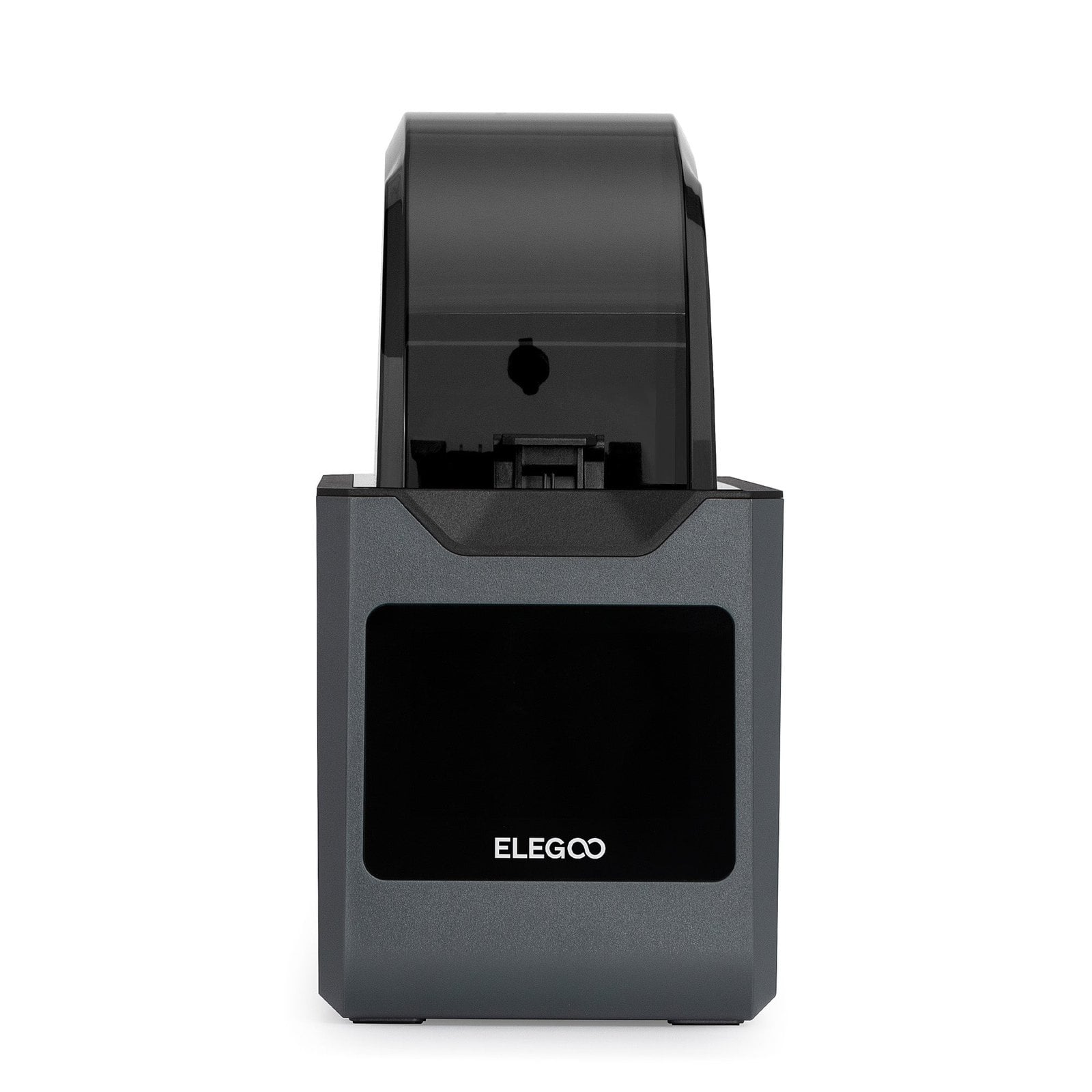
Once a spool has absorbed moisture, drying is the only fix. The most convenient way is a filament dryer like the Elegoo H1 HT (on Amazon*), which heats up to 85 °C, rotates the spool and actively vents the humid air – that covers nylon and CF filaments too, and you can print straight out of the dryer. Alternatively, a convection oven works: spool on the rack, set the temperature (values below), leave the door slightly open so the moisture can escape. But be careful: many ovens overshoot their set temperature by 10–20 °C – verify with a separate thermometer, or instead of a dry spool you will end up with a welded lump of PLA. A food dehydrator is the safer low-budget option, but usually only reaches PLA-friendly temperatures.
| Material | Drying temperature | Duration |
|---|---|---|
| PLA (all variants) | 45–50 °C | 4–6 h |
| PETG | 60–65 °C | 4–6 h |
| TPU | 50–55 °C | 4–8 h |
| ABS / ASA | 70–80 °C | 4–8 h |
| PETG-CF / PETG-GF | 70 °C (Elegoo spec) | 8 h |
| PAHT-CF (nylon) | 80 °C (Elegoo spec) | 8 h |
Money-saving tips
The 3D printing cost calculator shows what the per-kilo price means for a single part. Once you know which materials you go through regularly, there is real money to be saved per kilo: Elegoo’s bulk bundles (see the filament store*) cut the per-kilo price by roughly a quarter compared to single spools. The Basic refills without a spool save a bit more on top and shrink the spool pile on your shelf as a bonus. And a tip from my own workshop: rather buy few materials in several colors than one spool of every exotic – the opened spools that sit around for months are exactly the ones that go bad from moisture.
Conclusion: my starter setup
If I had to start from zero today, my shopping list would look like this: two spools of PLA (one standard for practice, one Matte for display pieces), one spool of PETG for everything functional, one spool of TPU for flexibles – plus vacuum bags with silica gel right away, before the first spool goes bad. That is roughly 70 to 80 dollars in total and covers a good 95 % of all projects. ASA joins the shelf once the first outdoor project comes up, and you think about CF filaments once there is a hardened nozzle in your printer. You can find all other articles of this series in the 3D printing hub – happy printing!
Frequently asked questions about choosing filament
ASA is the first choice for outdoors: it is UV-resistant, does not yellow and stays dimensionally stable even after years in the sun. PETG also works well for sheltered spots (under a roof, in the shade). PLA does not belong outside – UV light makes it brittle and it deforms on hot days.
As a rule of thumb for dimensional stability: PLA up to about 45–50 °C, PETG up to roughly 70 °C, ABS and ASA up to about 85–95 °C, polycarbonate up to 107 °C and PAHT-CF (nylon) up to 194 °C. For parts in a car or near heat sources use at least PETG, better ASA.
Practically no – even if the raw material (PETG, for example) is partly food-compliant. FDM prints have microscopic layer grooves that collect germs, and brass nozzles can shed traces of lead. For brief contact (cookie cutters that get washed afterwards) the risk is manageable; for permanent food contact printed parts are unsuitable unless they are sealed with a food-safe coating.
Typical signs: crackling or popping at the nozzle, sudden heavy stringing despite calibrated retraction, rough surfaces with tiny bubbles and brittle layer adhesion. The only fix is drying – PLA at 45–50 °C, PETG at 60–65 °C, for 4–6 hours in a filament dryer or convection oven (verify the temperature with a thermometer!).
PLA is easier to print and delivers the nicer surfaces – ideal for decor, prototypes and everything indoors. PETG is tougher, more heat-resistant (roughly 70 °C instead of 50 °C) and more weatherproof – the better choice for functional parts, brackets and anything under mechanical or thermal load. In short: looks → PLA, function → PETG.
Yes. Elegoo filament is regular 1.75 mm filament with ±0.02 mm tolerance and runs on practically every FDM printer – from Bambu Lab to Prusa to Creality. Just pick the generic profile for the respective material type in your slicer. One quirk: the eco-friendly cardboard spools can run unevenly in some AMS/multi-spool systems; rewinding or a printed spool adapter fixes that.
Very often it is not. Look at the label along the front edge of your build plate: many spring steel sheets are coated on both sides, and the two sides are made for different materials. If PETG is not in that list, the side simply is not meant for it – flipping the plate is the fix. Only after that are bed temperature, levelling and drying worth suspecting.